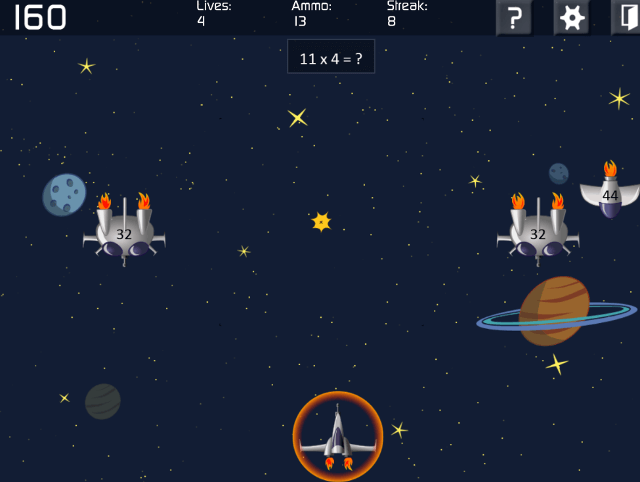
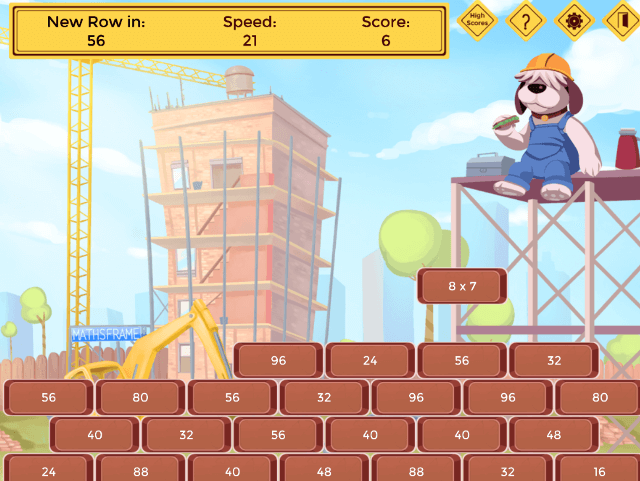
Most Popular

The 20 most popular maths resources last month (April 2013).

Description Description 
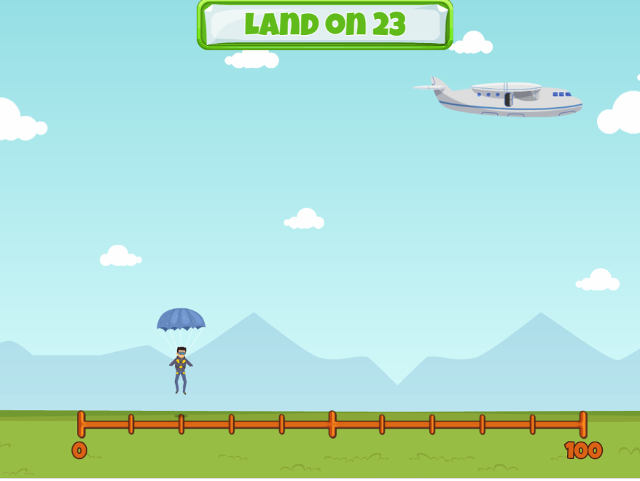
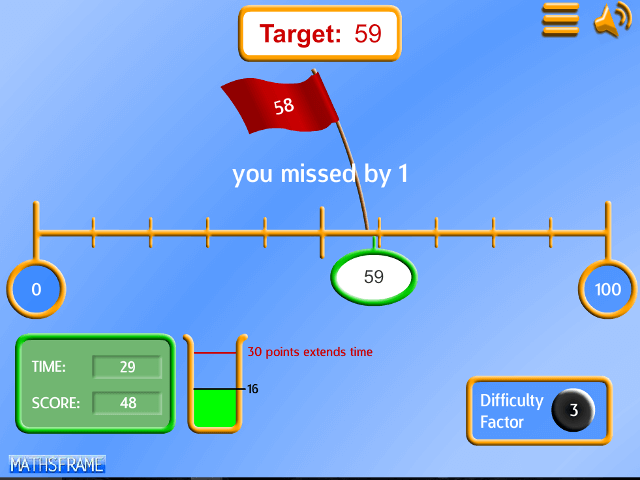
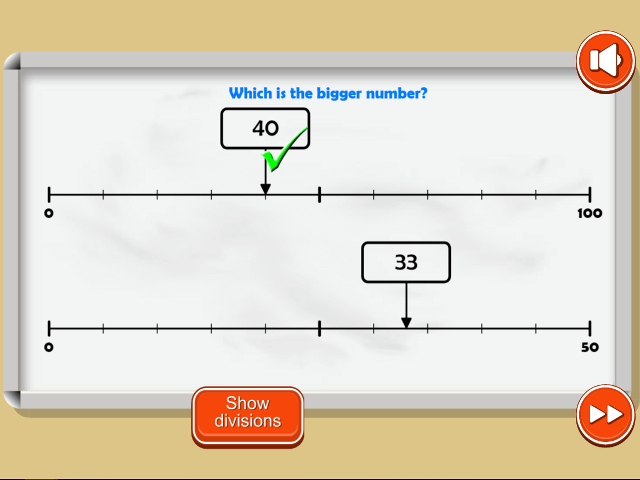
Placing Numbers on a Number Line Placing Numbers on a Number Line Placing Numbers on a Number Line

This is a new version and is also available as an ipad app. You can play the old version here.
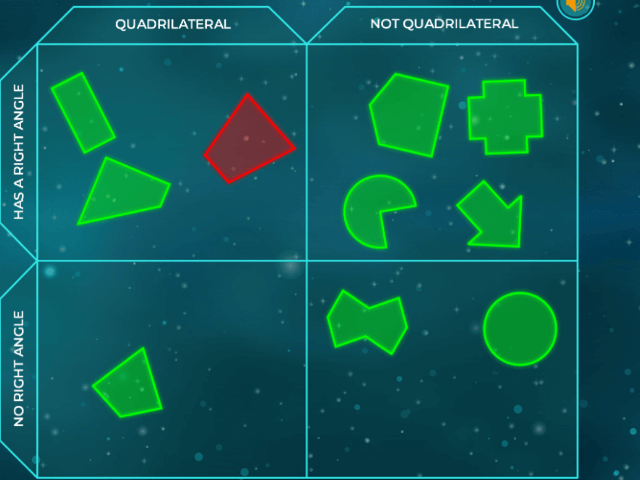
Drag the flag to the correct position on a number line. Lots of choice over level, including whole numbers, negative number and decimals. Can be used to teach place value, approximation skills, and reading varying scales.

Choose one type of number line or for more of a challenge you can select several. Work quickly to get more time, build your score and climb up the leaderboard.

For more resources involving partitioning and place value click here.

VIEW
Reading Scales - Capacity Word Problems Reading Scales - Capacity Word Problems Reading Scales - Capacity Word Problems

Read the scales on the measuring cylinder and answer word problems involving addition and subtraction. Play against the clock for points.

For more measuring resources click here.

For more resources involving word problems click here.

VIEW
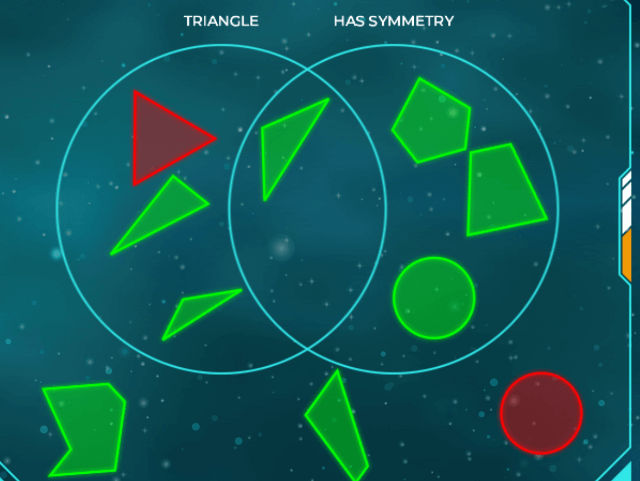
Sorting 2D shapes on a Venn diagram Sorting 2D shapes on a Venn diagram Sorting 2D shapes on a Venn diagram

Sort a variety of 2D shapes on a Venn diagram. Sort by one or two conditions. Sort triangles - scalene, equilateral and isosceles. Sort quadrilaterals, pentagons, hexagons, heptagons and octagons, as well as parallelograms, rhombus, kites and trapeziums. Also sort according to a shapes properties such as acute, obtuse, reflex or right angles and symmetry or whether it is a regular shape.

**2nd May 2013 - I have updated this game as somebody has rightly pointed out to me that equilateral triangles are also isosceles. My apologies for the error.**

For more resources involving sorting shapes and numbers click here.

For more shape and space resources click here.

VIEW
Sequences Sequences Sequences

Find the correct number in a sequence. Lots of choice over level, count forwards or back, count in whole numbers, multiples of 10, multiples of 100, decimals and fractions. 

For more addition and subtraction resources click here.

For more resources involving fractions and decimals click here.

VIEW
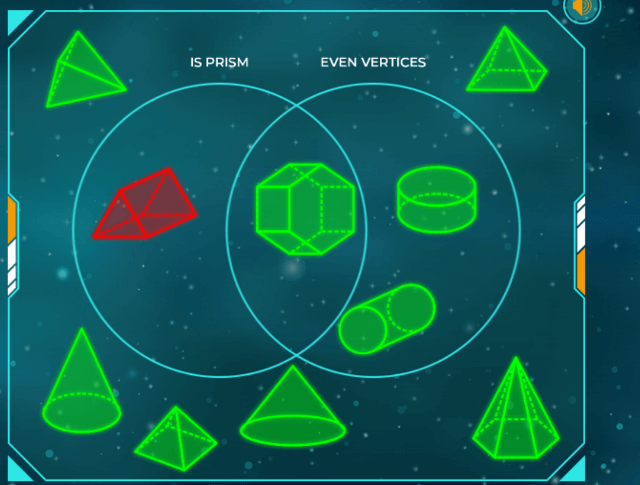
Sorting 3D Shapes on a Venn Diagram Sorting 3D Shapes on a Venn Diagram Sorting 3D Shapes on a Venn Diagram

Use a Venn diagram to sort a variety of 3D shapes according to their properties, including: whether they are pyramids or prisms, the number of faces, edges and vertices and whether they have a curved surface.

For more resources involving sorting shapes and numbers click here.

For more shape and space resources click here.

VIEW
Balancing scales - convert between g and kg Balancing scales - convert between g and kg Balancing scales - convert between g and kg

The scale is loaded with between 1 and 4 weights. The user then has to balance the scales, converting between g and kg in the process. There is a great deal of control over the level.

A great starter to explore addition, subtraction / difference and partitioning as well as the relationship between grams and kilograms. Levels include converting whole kg to g (and vice versa), converting fractions of kg (eg 1/4kg = 250g) and weights in kg to 1 and 2 decimal places.

For more measuring resources click here.

For more addition and subtraction resources click here.

VIEW
Bar Charts Bar Charts Bar Charts

Interpret data using bar charts. A number of different levels available.

For more resources involving word problems click here.

For more resources involving data handling click here.

VIEW
Balancing Calculations Balancing Calculations Balancing Calculations

Find the missing number to balance the calculations. An excellent tool for reinforcing an understanding of the role of the equals sign. Choose one objective, or many. You can choose all the objectives for a single year group (or multiple year groups). You can also choose to balance between different types of calculations (eg subtraction and division)

For more multiplication and division resources click here.

VIEW
Division by chunking down (repeated subtraction) Division by chunking down (repeated subtraction) Division by chunking down (repeated subtraction)

Use repeated subtraction (represented on a number line) to solve division problems.

VIEW
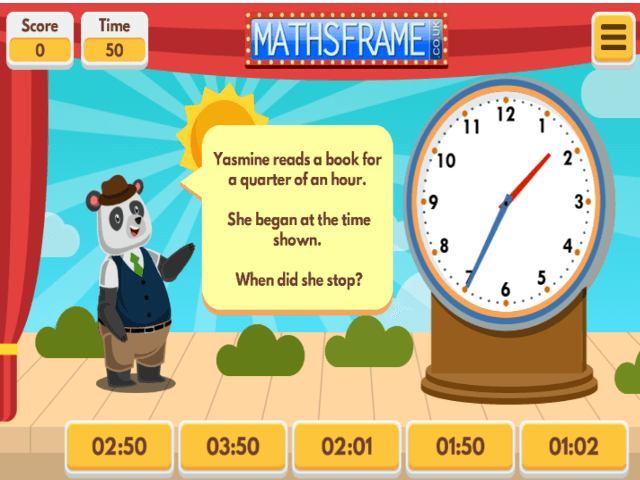
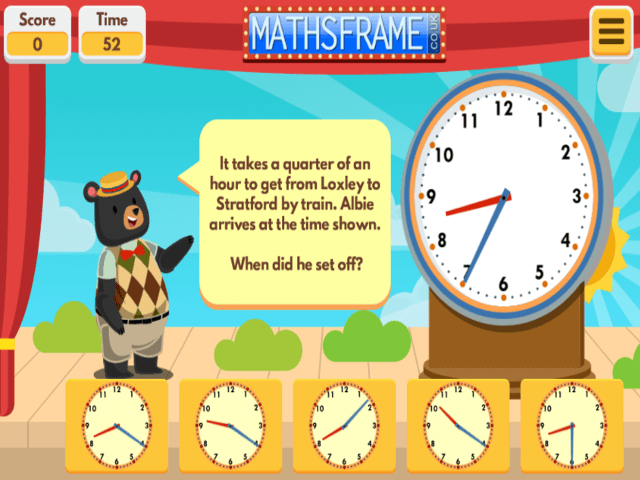
Adding Time Word Problems Adding Time Word Problems Adding Time Word Problems

Read the time on either an analogue or digital clock and then answer a word problem involving adding a given time. Find the correct time on an anologue or digital clock. Lots of choice of level, including: adding 1 hour, multiples of 5, or 10 minutes or adding multiples of a quarter of an hour.

For more measuring and time resources click here.

** updated May 2013 to include a scoreboard**

VIEW
Shape Sequences Shape Sequences Shape Sequences

Identify and continue sequences involving shape, colour and numbers.

For more addition and subtraction resources click here.

VIEW
Difference using an unmarked number line Difference using an unmarked number line Difference using an unmarked number line

Find the difference between two numbers by counting on from the smaller number to the larger number. Children must add the fewest numbers possible, so are encouraged to develop more efficient mental methods. The addition is also shown as jumps on a number line.

Levels include counting up to 10, 20, 50 or 100, finding the difference between 2-digit numbers, 3-digit numbers and decimals.

For more addition and subtraction resources click here.

VIEW
Venn sort numbers Sorting numbers on a Venn diagram Venn sort numbers

Sort numbers on a Venn diagram. Sort according to one or two properties, including: odd, even, multiples, square numbers, prime numbers, triangular numbers, numbers less than 30 or more than 50.

This game is also available as a free iPad app.
For more resources involving sorting shapes and numbers click here.
VIEW
Number Facts Beat The Clock Number Facts Beat The Clock Number Facts Beat The Clock

Score as many points as you can before the time runs out. A number of levels including addition, subtraction, multiplication, division and matching fractions and decimals.

For more addition and subtraction resources click here.

For more multiplication and division resources click here.

VIEW
Sorting 2D shapes on a Carroll diagram Sorting 2D shapes on a Carroll diagram Sorting 2D shapes on a Carroll diagram

Sort a variety of 2d shapes on a Carroll diagram. Sort by one or two conditions. Sort triangles - scalene, equilateral and isosceles. Sort quadrilaterals, pentagons, hexagons, heptagons and octagons, as well as parallelograms, rhombus, kites and trapeziums. Also sort according to a shapes properties such as acute, obtuse, reflex or right angles and symmetry or whether it is a regular shape.

**2nd May 2013 - I have updated this game as somebody has rightly pointed out to me that equilateral triangles are also isosceles. My apologies for the error.**

For more resources involving sorting shapes and numbers click here.

For more shape and space resources click here.

VIEW
Different ways to pay Different ways to pay Different ways to pay

Find different ways to make the same amount of money. Drag the coins into the till to make a given amount. Includes a choice of international currencies.

For more money resources click here.

VIEW
Division by chunking up (repeated addition) Division by chunking up (repeated addition) Division by chunking up (repeated addition)

Use repeated addition (represented on a number line) to solve division problems.

VIEW
Fewest Coins Fewest Coins Fewest Coins

Make a given total using the fewest coins possible.

For more money resources click here.

VIEW
Representing Multiplication - arrays and number lines Representing Multiplication - arrays and number lines Representing Multiplication - arrays and number lines

Represents multiplication using an array and by jumping on a number line. Great for developing an understanding of multiplication by partitioning.

VIEW
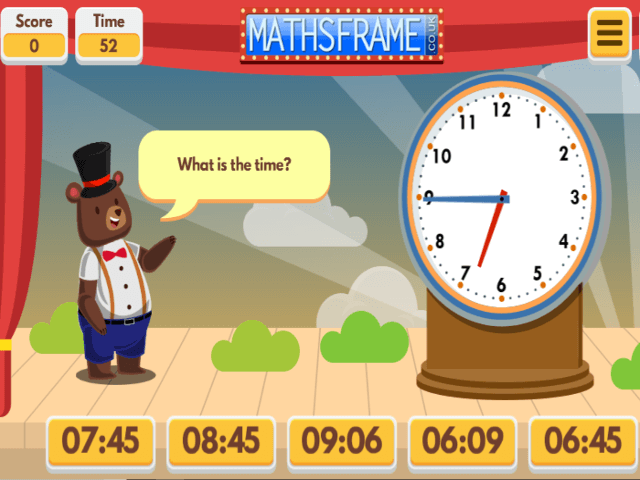
Telling the Time Telling the Time Telling the Time

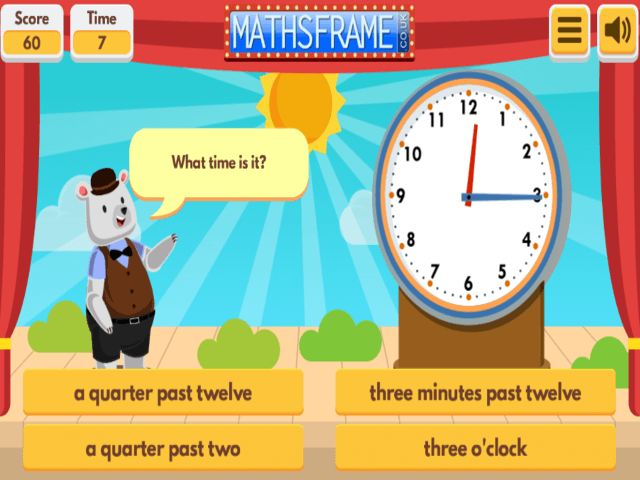
Read the time on an analogue clock. Lots of choice over levels, including: reading time to the nearest hour, half hour, quarter hour, five minutes or minute. Options include using a 24 hour clock and seeing how many correct answers you can get in a given time.

** update May 2013 - I have improved this game and added a scoreboard**

For more measuring and time resources click here.

VIEW
To get access to the full version of this resource and all other resources signup here

Access Full Resources